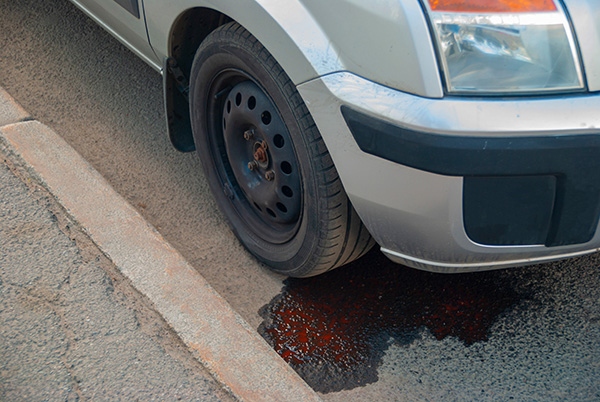
Power steering fluid has a habit of traveling. A leak can start at a hose fitting near the pump, run down the line, collect on the steering rack, and finally drip from the subframe several inches away. By the time you see the spot on the driveway, the wettest part is not always the part that failed.
That is why a leaking hydraulic steering system needs more than a quick look underneath. The location of the fresh fluid, when the leak gets worse, and where it collects around the rack and hoses all help us separate a rack seal problem from a leaking power steering line.
Where a Steering Rack Usually Leaks
A hydraulic steering rack contains seals that keep pressurized fluid inside while the rack moves left and right. As those seals age, fluid can seep from the pinion area where the steering shaft enters the rack or from seals farther out toward the inner tie rods.
One clue we look for is power steering fluid inside a rack boot. Those accordion-style boots are meant to protect the inner tie rods from dirt and water. They are not fluid reservoirs. If we loosen a boot and find power steering fluid trapped inside, the rack itself is very likely leaking internally.
What a Power Steering Hose Leak Looks Like
The steering system normally has a high-pressure line carrying fluid from the pump and a lower-pressure return line bringing it back. Hoses can leak through cracked rubber, rusty metal sections, worn seals, or the crimp where rubber and metal portions join.
High-pressure leaks can be especially tricky because they sometimes stay almost dry while the car sits. Turn the steering wheel with the engine running and watch for fluid seeping or spraying from the weak spot. Return lines tend to produce slower leaks, although a split hose can still empty a reservoir surprisingly quickly.
The Highest Fresh Wet Spot Gives Us a Clue
When everything underneath is covered in oily residue, we cannot tell much from the drip on the ground. We first identify the fluid, clean the affected area when necessary, and then watch for fresh leakage.
A few places get close attention:
- Hose crimps and rubber sections
- Pressure and return line fittings
- Connections where the hoses enter the rack
- The steering shaft and pinion seal area
- Both rack boots
- The pump and reservoir connections
Following fresh fluid upward is more reliable than replacing whichever component happens to be wettest. Airflow under the car and gravity can spread steering fluid across a surprisingly large area.
Pressure Can Expose a Hose Problem
Power steering pressure rises when the system has to provide more steering assist. Parking maneuvers and low-speed turns place more demand on the hydraulic system than cruising straight down the road.
At our shop, we sometimes see a hose that looks acceptable with the engine off but begins leaking once steering pressure builds. A weak crimp or fitting can open under load, then appear nearly dry again after the engine is shut down. That pattern leans more toward the line or fitting than an internal rack seal.
Rack Boots Tell a Different Story
Fluid coating the outside of a rack boot does not automatically condemn the rack because a hose above it can leak onto the boot. Fluid inside the boot is much more telling.
We also check whether the boot is swollen, soft, or holding enough fluid to sag. If an internal rack seal has been leaking for some time, the boot can hide quite a bit before anything reaches the driveway. That is one reason a proper inspection is useful even when the leak seems small from underneath.
Both Leaks Can Create the Same Steering Symptoms
Once enough fluid escapes, either type of leak can make the pump pull air. You may hear whining or groaning while turning, see foam in the reservoir, or notice increased steering effort while parking.
Those symptoms tell us the fluid level or hydraulic pressure is wrong, but they do not identify the source. We still have to trace the leak. Continuing to top off the reservoir without repairing it can also damage the pump if the level repeatedly drops too low.
How the Repair Changes Based on the Source
A leaking hose can normally be replaced without replacing the steering rack. We inspect the fittings and related seals, install the correct line, refill the system with the specified fluid, and bleed trapped air from the hydraulic circuit.
An internally leaking rack generally calls for rack replacement, followed by checking the connected tie rods and performing a wheel alignment when required. Regular maintenance gives us a chance to notice small fluid losses before the pump starts running low. The sooner we know where the leak begins, the easier it is to avoid replacing parts that are only wet because fluid traveled across them.
Get Power Steering Leak Repair In Denton, TX, With Strande's Garage
If your power steering fluid keeps dropping or you see wetness around the rack and hoses, Strande's Garage in Denton, TX, can trace the leak and determine which part of the hydraulic steering system actually needs repair.
Schedule a visit before a small leak leaves the reservoir low enough to affect steering assist or damage the pump.