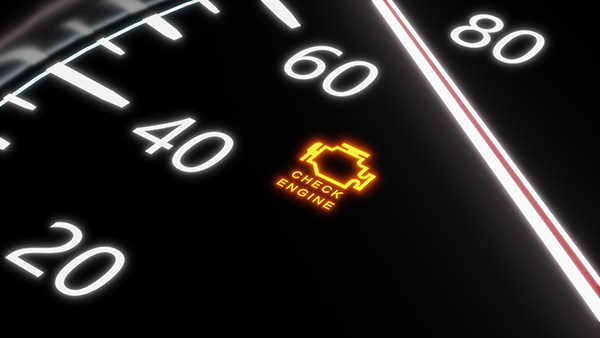
A check engine light can be surprisingly easy to ignore when the car still feels normal. It starts, idles, shifts, and drives the same way it did yesterday, so the warning feels out of place. A lot of drivers assume the light must be minor if the car is not acting up.
That is usually the stage where the problem is still small enough to catch early.
Why The Computer Sees Trouble Before You Do
Your car’s computer is watching dozens of systems all the time. It tracks sensor readings, fuel mixture, ignition performance, emissions equipment, and the way the engine responds under different conditions. When something falls outside the expected range, it stores a fault and turns the light on.
That can happen well before the issue becomes obvious to the driver. In other words, the car may feel fine because the problem is still in its early stage, not because nothing is wrong. The warning is often there to give you time to deal with it before the symptoms get harder to ignore.
Some Problems Start Quietly
Not every check engine light comes with rough running, stalling, or poor acceleration. A lot of common faults begin in the background and stay subtle for a while. The engine computer may be making small corrections to keep the car driving normally, even while one part of the system is no longer doing its job correctly.
That is why a light can come on even though the car still feels smooth. The system may be compensating just enough to hide the problem for now. Once those corrections are no longer enough, the car usually starts showing it through lower fuel economy, a rougher idle, harder starts, or hesitation under load.
What Usually Triggers A Light Without Obvious Symptoms
A few issues show up again and again in cars that still seem to drive fine:
- A loose or failing gas cap
- A small EVAP system leak
- An aging oxygen sensor
- A mass airflow sensor is starting to fail
- Early spark plug wear
- An emissions valve that is sticking
None of these has to make the car run badly right away. They just have to give the computer enough evidence that something is not operating the way it should.
Why Resetting The Light Is Not A Fix
A lot of drivers are tempted to clear the light and see if it comes back on. That may make the dashboard look better for a day or two, but it does not solve the cause. If the issue is still present, the computer will eventually catch it again.
Sometimes resetting the light creates more confusion because the car goes through a fresh monitoring cycle and delays the return of the warning. That can make the problem feel random when it really is not. A proper inspection saves a lot more time than trying to outguess the system.
The Trouble Code Does Not Always Name The Bad Part
One of the biggest mistakes people make is assuming the code tells them exactly what needs to be replaced. Sometimes it does point straight to the failure. Plenty of times, it only points to the system where the fault was detected.
For example, an oxygen sensor code does not always mean the sensor itself has failed. The real cause could be a vacuum leak, fuel trim issue, weak ignition, or even an exhaust leak. That is why a scan is the beginning of the diagnosis, not its end.
When A Steady Light Turns Into A Bigger Problem
A steady check engine light is different from a flashing one. Flashing is more urgent and usually points to an active misfire that can damage the catalytic converter. A steady light usually means the car is still drivable, but it should not be ignored for long.
What starts as a light with no obvious symptoms can turn into something more expensive if it sits. That is especially true if the problem affects fuel mixture or emissions control. A small issue now can lead to worse fuel economy, converter damage, or drivability problems later.
What To Pay Attention To Before Your Appointment
If the car still feels fine, pay attention to the little things. Those details help narrow the cause down faster.
Watch for patterns like these:
- Slightly lower gas mileage
- A longer crank before startup
- A rougher idle at stoplights
- A fuel smell
- Hesitation when pulling away
- The light is going on and off
Those clues often tell more of the story than the light by itself. During regular maintenance, symptoms like these are sometimes caught before the warning even shows up.
Why It Is Smarter To Check It Early
The best time to deal with a check engine light is while the car still feels normal. That is often when the repair is most focused and least disruptive. Waiting until the engine runs badly usually means the issue has had time to spread or get more expensive.
A good inspection should include the stored faults, live data, and the conditions that triggered the light in the first place. That is what separates a real repair from a guess.
Get a Check Engine Light Diagnostic In Denton, TX, With Strande's Garage
If your check engine light is on but the car still feels fine, Strande's Garage in Denton, TX, can inspect the system, read the stored faults, and pinpoint the actual cause before that warning turns into a bigger repair.
Bring it in while the issue is still early and easier to correct.