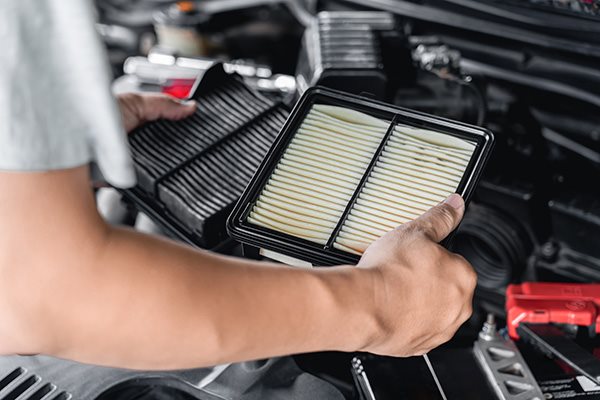
Your fuel economy has slipped, and the engine air filter looks dark and dusty. Replacing it seems like an easy way to use less gas, especially when the dashboard has no warning lights. But modern engine controls change the relationship between airflow and fuel consumption. A restricted filter needs maintenance, yet it isn't always responsible for poor mileage. Understanding the difference helps you avoid overlooking a more significant problem.
How an Engine Air Filter Affects Airflow
The air filter traps dust and debris before outside air reaches the engine. Its housing and ducting are designed to supply clean air while keeping contamination away from the intake and combustion chambers. As dirt accumulates, airflow resistance increases. Under heavy engine demand, a severely restricted filter can limit the amount of air entering the engine and reduce available power.
An ordinary dusty appearance doesn't prove the filter is clogged beyond its service limit. Lighting, filter material, and local conditions change how dark an element looks. During an inspection, we examine the filter, air box, and intake seals for unusual contamination or damage. Routine maintenance should follow the manufacturer's interval and the condition found, particularly after frequent travel on dusty roads.
Why Modern Fuel-Injected Cars Behave Differently
In a modern gasoline engine, sensors and the computer manage the amount of fuel delivered in relation to incoming air. If a dirty filter slightly restricts airflow, the system generally adjusts fuel delivery accordingly. U.S. government fuel-economy guidance explains that replacing a clogged filter on modern fuel-injected, computer-controlled vehicles usually improves acceleration, not fuel economy. That result surprises drivers who remember advice written for older carbureted engines.
Older carbureted vehicles respond differently because their fuel-metering systems aren't controlled in the same way. A severely restricted filter on those engines can increase consumption. The distinction is important when deciding how to interpret a decline in miles per gallon. A new filter is worthwhile when needed, but promising a large fuel-economy gain on a modern car isn't supported by typical test results.
Reduced Power May Change How You Drive
Even if an engine computer keeps the air-fuel mixture under control, a heavily restricted filter reduces available airflow at high demand. You may notice weak acceleration when climbing hills or merging into traffic. Some drivers compensate by using more throttle or choosing different gears, which affects real-world consumption. Those changes aren't the same as a direct fuel-mixture penalty caused by the dirty filter.
Does the car feel normal at steady speed but sluggish when you accelerate? That pattern is worth reporting during an inspection. Intake leaks, exhaust restrictions, fuel delivery problems, and sensor faults cause similar symptoms. We evaluate the intake system and engine data before blaming the filter for every change in performance. A new element won't repair a split intake hose or incorrect sensor reading.
Why There May Be No Check Engine Light
Engine computers illuminate the check engine light when monitored conditions meet specified fault thresholds. A filter can become dirty enough to affect performance without triggering a monitored electrical or emissions fault. The absence of a warning doesn't establish that the intake system is clean. Likewise, a warning light that does appear isn't necessarily caused by the filter.
Airflow sensors, intake ducting, and air-box seals also require care. A poorly installed filter lets dirt bypass the element and may damage sensitive components. A torn filter or loose housing is more urgent than ordinary surface dust. During maintenance, checking how the filter sits and the seals is as important as simply dropping a replacement into the box.
Fuel Economy Has Several More Common Influences
Low tire pressure, frequent idling, short trips, cold starts, and driving speed all change the fuel you use. Spark plug faults, dragging brakes, and engine temperature problems are other possibilities when consumption rises unexpectedly.
A dirty filter and poor fuel economy may occur at the same time without a direct cause-and-effect relationship. A good inspection compares multiple clues before recommending repairs.
Track several tanks over similar trips and note any new hesitation, rough idle, or warning lights. We consider the vehicle's maintenance history and any changes in tire size, route, or driving conditions. One unusually low-mileage fill-up isn't reliable evidence. If the engine's performance has changed noticeably, the air filter is one part of a broader assessment.
When the Air Filter Should Be Replaced
Manufacturers set inspection and replacement intervals based on expected use. Vehicles traveling regularly on dusty rural roads or through construction areas sometimes need earlier service than those used mainly on clean pavement.
A filter that is torn, wet, improperly sealed, or loaded with debris needs prompt replacement or service. Trying to clean a disposable filter with compressed air can damage the filtering material or leave dirt embedded inside.
Signs worth reporting include:
- Weak acceleration under heavy engine load
- Heavy dust or debris inside the air box
- A damaged, damp, or poorly seated filter
- Service far beyond the recommended interval
- New engine noises or an unusual intake whistle
The filter is relatively inexpensive compared with damage caused by dirt entering the engine. Replacement is justified by its condition and service requirement, not a promise of effortless fuel savings.
Match the Repair to the Real Cause
If the filter is overdue, replace it with a correctly fitting part and inspect the air box for leaks. If fuel consumption remains high, look at other systems using evidence from the vehicle and your driving history. An electronic fault may need scan data, while dragging brakes or low tire pressure calls for a mechanical check. Maintenance and troubleshooting are related, but they answer different questions.
A proper air filter service restores the intended clean airflow and helps protect internal engine components. The change in fuel economy, if any, should be measured over comparable trips. You'll have a clearer understanding of what the filter actually contributed and which other problems need inspection.
Get Engine Air Filter and Fuel-Economy Inspection in Denton, TX, With Strande's Garage
Strande's Garage in Denton, TX, helps drivers inspect engine air filters, intake components, and other causes of reduced performance or increased fuel use. We'll explain what testing supports.
Call Strande's Garage or schedule a vehicle inspection online today.